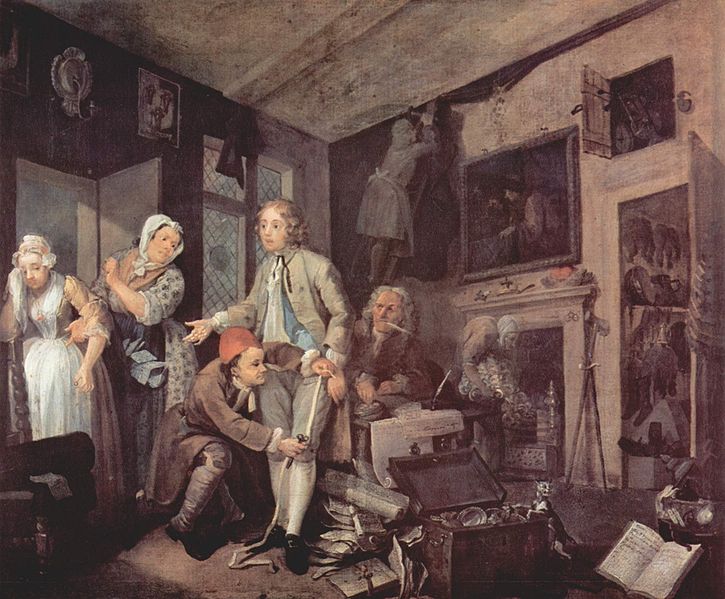
As the dust settles on the battlefield that was the 2010 General Election, it is now possible to identify some big political winners and losers. The election promised to be a bloody encounter, with the aftermath resembling the Battle of Naseby, but for all its pre-match hype the election descended into a bizarre episode of It's a Knockout, where the result is rather inconsequential, but everyone enjoyed the ride. With Sky News' "political heavyweight" Adam Boulton as the over overexcited Stuart Hall, demeaning the contestants at every given opportunity as they attempt to carefully manoeuvre themselves through a political obstacle course.
On the surface it is possible to assert that David Cameron and the Conservative Party won the election, they won more seats and more of the popular vote than their rivals. However, given the unpopularity of the incumbent Prime Minister and government, the state of the economy, unemployment and the spectre of the Iraq War, this Tory victory almost feels like a defeat. The result - an unsatisfactory coalition with the Liberal Democrats and an election that the Bank of England Governor Mervyn King believes will leave the winning Party out of power for a generation due to the unpopularity of the necessary austerity measures. Parallels could be drawn with the 1992 General Election, in which neither the Labour or the Conservative Parties particularly wanted to win due to the gathering economic storm, and ultimately Labour's short term defeat was their long term gain.
Again a case could be made for the Liberal Democrats and Nick Clegg as the big winners of the 2010 General Election; an increase in their share of the popular vote, increased exposure on a national level and the possibility to influence legislation at a cabinet level. But, and there was always going to be a big but, are the Liberal Democrats trading short term influence for long term obscurity . Many voters feel betrayed that the Lib Dems are propping up a Tory administration that are ideologically significantly separate and are going to be used are a tool for David Cameron to modernise his own party. It will be too easy at the next general election for the Conservative Party to blame the Liberal Democrats for the failings of this current administration. Damned by both sides of the party, the Liberal Democrats could spend another thirty years waiting for a taste of power.
If there is a significant loser in this election there is little argument that Gordon Brown has achieved this most dubious of accolades. But it always was likely to happen, any incumbent Prime Minister has a record to defend and Gordon Brown just was not that good at defending his legacy. However, the Labour Party could be the big winners of the election in the long term, even though the electorate roundly rejected their current reincarnation. There obviously is a will amongst the British electorate for a progressive policy agenda, and probably the Labour Party would have polled better if Gordon Brown was not in power, but the loss was not a rout as many commentators had predicted. If the Labour Party reorganise and realign themselves during their period in opposition the next election could be a significant success - if Mervyn King is to be believed.
And the winner is... No one!
Showing posts with label Labour Party. Show all posts
Wednesday, 19 May 2010
Wednesday, 21 April 2010
The Kingmaker and I
In the run up to a general election, party leaders can be forgiven for making some pretty rash statements, the pressure and punishing schedule will inevitably cause a lack of focus. But to base your entire election campaign and manifesto around these pretty rash statements is disingenuous and fool hardy at best. Both Plaid Cymru and the Scottish National Party have taken centre stage this week with their manifesto launch and some pretty dubious claims concerning how they will use their influence in a hung parliament to gain concessions for their respective countries.
The claims themselves are not particularly dubious, every small party or independent will sell their vote on certain issues to gain influence in other areas, it is the way of a Westminster Parliamentary System. The disingenuous aspect to their claims is the misrepresentation and exaggeration to the electorate of the likelihood of these events; in essence they are suffering from small dog syndrome - they believe they are bigger than they are.
Currently the SNP have seven Members of Parliament whilst Plaid have three out of the total of 646, this represents 1.5% of the elected representatives at the House of Commons. This has always been traditionally adequate to contribute to debates, influence policy and potentially effect some legislation, but to now suggest that the national parties will have undue influence on any potentially weak or coalition government after this current election is simply not feasible.
According to the latest Populus Poll the current voting intentions are as follows:
However, this issue perfectly highlights the incredible inequities in our current electoral system and the bias that the incumbent administration can command over redrawing constituency boundaries to make marginal seats safer.
The claims themselves are not particularly dubious, every small party or independent will sell their vote on certain issues to gain influence in other areas, it is the way of a Westminster Parliamentary System. The disingenuous aspect to their claims is the misrepresentation and exaggeration to the electorate of the likelihood of these events; in essence they are suffering from small dog syndrome - they believe they are bigger than they are.
Currently the SNP have seven Members of Parliament whilst Plaid have three out of the total of 646, this represents 1.5% of the elected representatives at the House of Commons. This has always been traditionally adequate to contribute to debates, influence policy and potentially effect some legislation, but to now suggest that the national parties will have undue influence on any potentially weak or coalition government after this current election is simply not feasible.
According to the latest Populus Poll the current voting intentions are as follows:
- Conservatives - 32%
- Labour - 28%
- Liberal Democrat - 31%
- Other - 9%
- Conservatives - 234 seats
- Labour - 278 seats
- Liberal Democrat - 109 seats
- Other - 29 seats (SNP - 8 seats, Plaid - 3)
However, this issue perfectly highlights the incredible inequities in our current electoral system and the bias that the incumbent administration can command over redrawing constituency boundaries to make marginal seats safer.
Subscribe to:
Posts (Atom)